2026-08-29 · Scott Merrick
Signs You Need a Whole-House Repipe in Sacramento's Older Homes
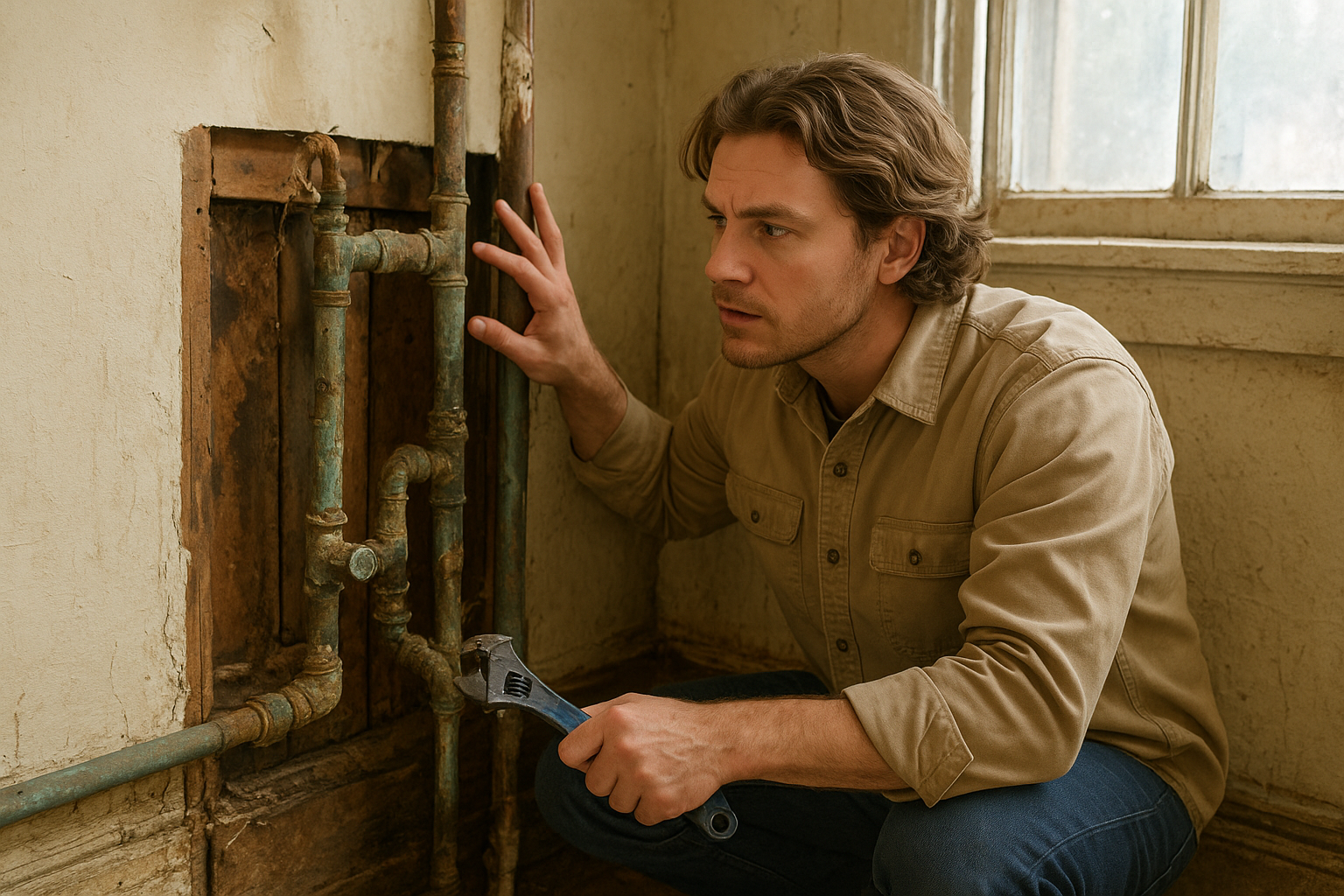
Homes in Sacramento built before 1970 typically need a whole-house repipe once galvanized steel or early copper lines show widespread corrosion, low pressure, and repeated leaks that no longer respond to spot repairs. These systems last 40 to 60 years in local conditions before hard water scale and age force replacement.
Persistent Low Water Pressure in Multiple Fixtures
When faucets in the kitchen, bathrooms, and laundry all deliver weak flow at once, the main supply lines have narrowed from internal rust and mineral buildup. In pre-1970s homes across Midtown Sacramento and East Sacramento this pattern appears after decades of hard water exposure. Homeowners often notice the drop first during morning routines when several fixtures run together. A single clogged aerator can be cleaned, yet when the issue affects the entire house the supply piping itself has lost capacity. Professional pressure testing at the meter and at interior outlets confirms whether the restriction sits inside the walls or at the street connection. Replacing only the visible sections rarely restores full flow because the remaining old pipe continues to restrict volume.
Discolored Water and Metallic Taste
Brown, yellow, or rusty water that clears after a few minutes points to corroding galvanized lines shedding iron particles. Cool wet winters followed by hot dry summers accelerate this scaling inside Sacramento pipes. The metallic taste becomes noticeable in coffee or cooking and stains white fixtures over time. When the discoloration occurs even after the water heater has been flushed, the cold water lines are the source. Spot flushing or adding filters masks the symptom but does not stop the ongoing pipe deterioration. Whole-house repipe restores clear water by removing every section of the original material.
Repeated Leaks at Joints and Walls
Small pinhole leaks that appear every few months in different locations signal that the pipe walls have thinned beyond reliable repair. In older Land Park and Oak Park properties these leaks often surface near elbows or at transitions from galvanized to copper. Each repair requires opening drywall and still leaves the surrounding pipe vulnerable. When leak detection locates three or more active failures within a year, the cost of repeated access and patching exceeds the price of replacing the full system. A whole-house repipe uses modern PEX or copper sized for current demand and eliminates the weak points at once.
How Hard Water Accelerates Pipe Failure
Sacramento's hard water deposits calcium and magnesium that narrow pipe diameter and promote corrosion from the inside out. Pre-1970s homes in neighborhoods such as North Sacramento and South Sacramento already contain galvanized lines that react strongly with this mineral load. Over 8 to 12 years the scale layer can reduce a ¾-inch pipe to half its original opening. The same conditions shorten water heater life, which is why many units fail at the first cold snap when demand rises. Linking the repipe decision to hard water effects helps homeowners understand why isolated fixes keep recurring. How Hard Water Wears Out Sacramento Plumbing explains the chemistry in local water.
When Spot Repairs No Longer Make Sense
Once three or more leaks occur within 12 months or water pressure drops below 40 psi at the main, the economics shift toward full replacement. Factors that raise cost include home size, pipe material, access through finished ceilings, and any required permits. A typical 1,800-square-foot Sacramento bungalow ranges from $8,000 to $14,000 depending on those variables. Water Line Repair handles isolated sections, yet when the majority of the system shares the same age and condition a complete repipe prevents the next failure before it starts. Owners in older sections of the city often schedule the work during milder months to minimize disruption.