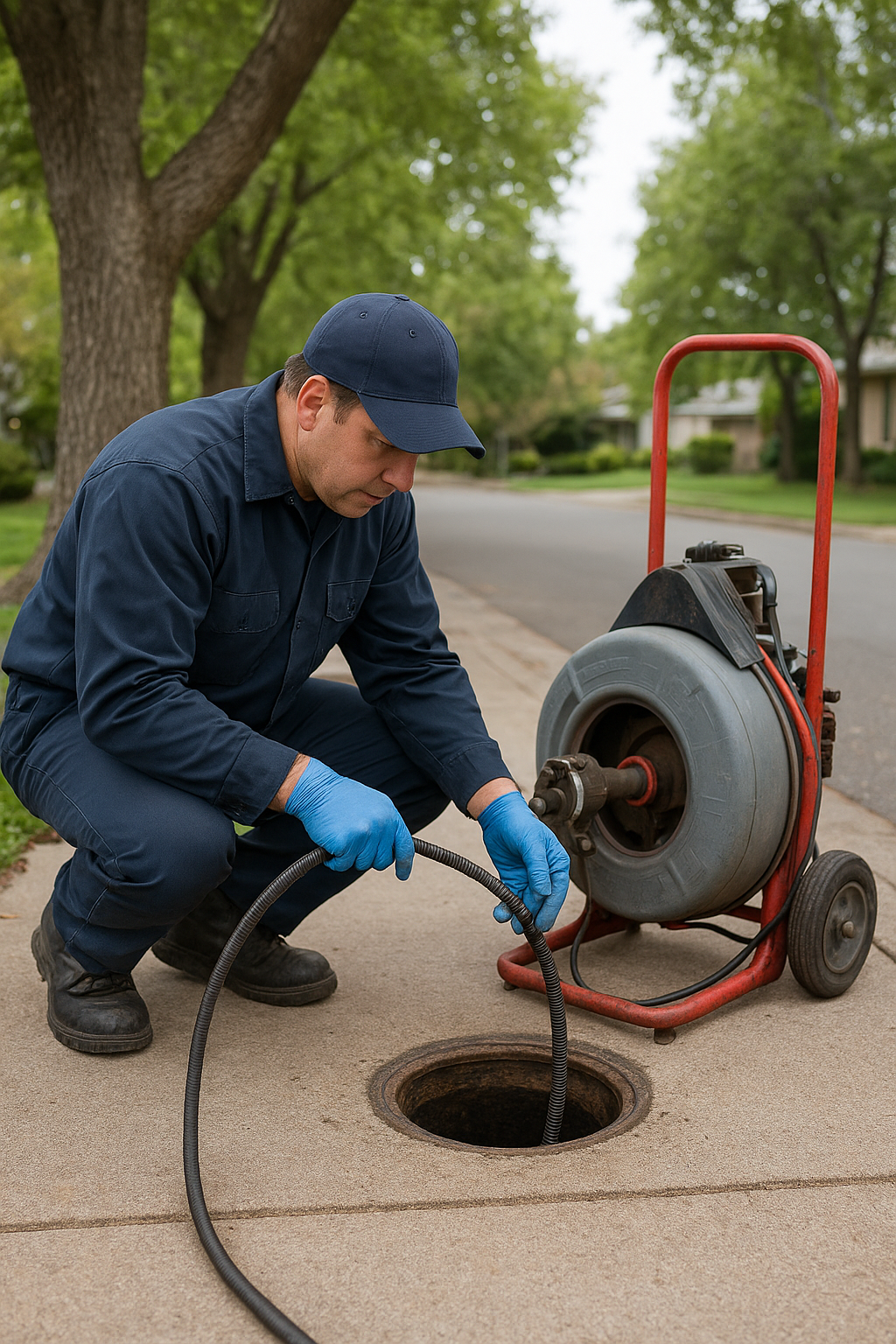
Sacramento's mature trees send roots into clay and cast-iron laterals throughout East Sacramento, Land Park, and Oak Park, where many homes predate 1970. These roots enter joints during the cool wet winters when soil moisture increases, creating recurring blockages that standard augers only temporarily clear. Hard water deposits compound the problem by narrowing pipes over time, so a job that looks simple on the surface often requires hydro jetting followed by a camera inspection to confirm the line is fully restored.
We handle drain cleaning across the entire Sacramento area — East Sacramento, Land Park, Curtis Park, Tahoe Park, Oak Park, Boulevard Park, River Park, Sierra Oaks, Campus Commons, Midtown, and the newer Natomas and Pocket neighborhoods. Because a blocked main can't wait, we offer same-day and emergency drain cleaning, and for recurring root and scale problems we recommend hydro jetting over standard snaking. Hydro jetting in Sacramento is the most reliable fix for the city's root-heavy clay laterals: high-pressure water scours the full pipe wall clean rather than just breaking a hole through the clog, so the line stays clear through the wet season instead of blocking again within weeks. When the camera shows the clog is actually a broken or collapsed pipe, we move to sewer line repair rather than repeat cleanings.
Access points matter in these neighborhoods. Many properties have cleanouts located under patios or behind mature landscaping, forcing extra excavation or the use of longer cable machines. In newer sections such as North Natomas the lines are PVC and rarely see roots, but older galvanized or clay runs in South Sacramento can collapse under repeated root pressure — in those cases trenchless sewer repair can replace the line without tearing up the yard, turning a cleaning call into a lasting fix once the camera reveals the damage.
Seasonal timing affects both demand and technique. The first cool snap after summer brings a spike in calls as ground water rises and roots become active again. We schedule longer blocks for these jobs because a single pass rarely suffices; multiple passes with different head styles plus post-clean flushing are standard to prevent immediate callbacks when the next rain arrives.
Technician insight
In Sacramento, the thing that catches most people out with Drain Cleaning is how quickly mature tree roots re-enter clay laterals in East Sacramento and Land Park once winter rains start; a homeowner who waits until the line is fully blocked often ends up needing a second visit within weeks because the initial clearing didn't reach the joint where the roots are actually growing.
Land Park root intrusion
A homeowner in Land Park noticed slow drains after the first fall rain. Camera revealed roots at two joints in the 1950s clay lateral. We used a root-cutting head followed by hydro jetting, then verified the line was clear. The drains returned to full flow and the owner scheduled annual maintenance before the next wet season.
Drain Cleaning Services We Offer
✓Hydro Jetting Service
High-pressure water scouring (around 3,500 PSI) that strips roots and scale from the full pipe wall in Sacramento clay and cast-iron lines where standard snaking keeps failing.
✓Main Sewer Line Cleaning
Clears roots and sludge from the primary sewer lateral serving older Sacramento homes where clay pipe and tree roots meet.
✓Kitchen Drain Cleaning
Removes grease and hard-water scale buildup common in lines running from older kitchens in Land Park and East Sacramento.
✓Shower and Tub Drain Cleaning
Extracts hair, soap scum, and mineral deposits that collect in smaller lines typical of pre-1970s Sacramento bathrooms.
✓Camera Drain Inspection
Locates root entry points and pipe damage in laterals before committing to cleaning or repair in Oak Park and Midtown properties.
Drain Cleaning Cost in Sacramento, CA
| Service | Typical Range | What Affects It |
|---|---|---|
| Kitchen or bath branch line | $175–$350 | Moves with access difficulty and length of run in older homes |
| Main sewer line cleaning | $250–$550 | Higher when roots require multiple heads or hydro jetting |
| Hydro jetting add-on | $150–$300 | Depends on pipe diameter and extent of scale |
| Camera inspection | $125–$225 | Often bundled; separate when done as diagnostic only |
Ranges are typical for Sacramento, CA and confirmed with an exact written quote before any work starts.
How it works
- 1
Site Assessment
We locate cleanouts and note tree proximity in the yard before selecting equipment sized for the pipe material and access constraints.
- 2
Initial Clearing
A cable machine or hydro jet breaks through the clog while we monitor flow to confirm we have reached the main.
- 3
Camera Verification
We run a camera to document remaining roots or damage and decide whether a second pass or excavation is needed.
- 4
Final Flush And Test
Hot water and enzyme treatment flush residue, then we test multiple fixtures to ensure the line holds flow through the next wet season.
Pricing
Cost depends on pipe material, depth of access, and whether roots have caused collapse; older neighborhoods usually fall at the higher end of the range.